
Sidewalks and curbs
A utility trench that left a dip in the walk
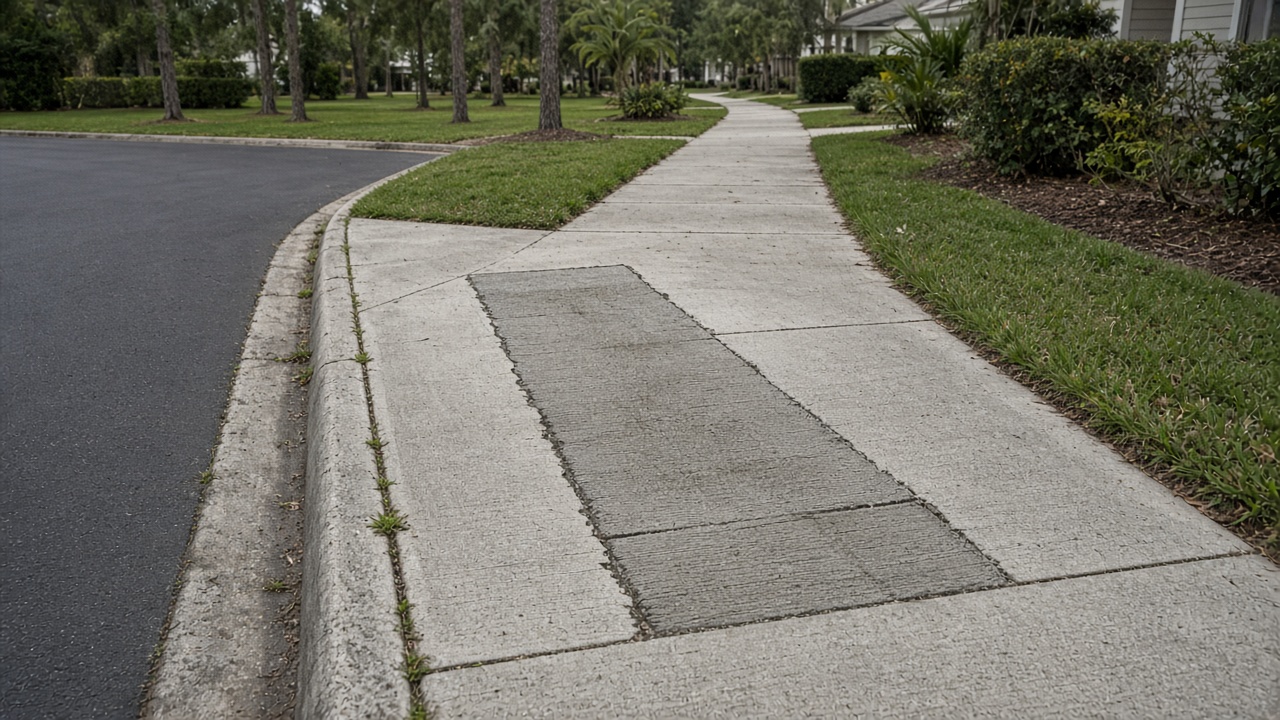
A trench patch that settled is not a root heave. The line on the paper should say the cut, not sidewalk repairs.
A rectangular patch in a community walk is usually a utility trench, not a root and not a storm washout. Precision Concrete & Construction sees those dips after fiber, water, or cable crews cut the panel and put a cold patch back that later settles.
HOA managers in Orange, Seminole, Brevard, Volusia, Osceola, and Lake counties get the resident call months after the utility left. The patch is a different color. It holds water. It is a trip. Grinding the high side of a settled patch does not put the base back.
Name the cut on the estimate
Nikki Mejia walks the run. The proposal should say utility-cut replacement, not a lump of sidewalk repairs. If the utility is still finishing the street, wait until they are off it, or the new panel gets cut again. The washout guide is a void after rain. The trip-hazard page is a lip from roots. This page is the trench.
What this is not
This is not a utility claim, and it is not a promise the original contractor will pay. Call (407) 925-7873 for a free assessment, or email info@precisionpaintandconstruction.com. A photo from the side, showing the rectangle, is enough to start.
More guides
City sidewalk, HOA sidewalk, or the lot: who repairs it When the expansion joint on a community walk opens Stamped concrete at the community monument Irrigation heads that sit in the sidewalk panel Clubhouse stairs are not an ADA ramp When rain washes the soil out from under a sidewalk Spalling on the amenity pool deck Settled pavers at a community entry The slab under a pavilion, mail kiosk, or dumpster pad Exposed-aggregate entry drives are not broom sidewalks What the board should see on a sidewalk proposal Trip hazards on HOA sidewalks in Central Florida What happens at a free assessment